When a Cook County construction project turns into a dispute, the money at stake rarely waits. Unpaid invoices, defective work, blown deadlines, and broken contracts can stall a build and put a business at risk. A focused Cook County construction litigation attorney helps you protect your position and pursue what you are owed.
At M&A Law Firm, P.C. Trial Lawyers, construction disputes sit at the core of our practice. We are a boutique litigation firm based in Schaumburg, and we represent owners, general contractors, subcontractors, suppliers, and developers throughout Cook County and the surrounding suburbs. Litigation is what we do, not a sideline, which lets us move decisively when a dispute demands it.
Our founding attorney, Ahmed Motiwala, worked inside the real estate and construction world for years before he tried a single case. That background shapes how we read a project, a contract, and the people on the other side. Call 847-786-8999 for a free consultation and speak directly with a litigation attorney about your matter.
Table of contents
- What Does a Cook County Construction Litigation Attorney Handle?
- Construction Disputes We Handle in Cook County
- How Do Mechanic Liens Work on Cook County Projects?
- Common Reasons Cook County Construction Projects End Up in Court
- Why Does Cook County Construction Litigation Require Local Court Knowledge?
- A Construction Litigation Lawyer Who Has Lived the Build
- How Do We Build and Prove a Construction Case?
- What Happens When You Bring Us a Construction Dispute?
- Why Clients Choose M&A Law Firm, P.C. Trial Lawyers for Construction Disputes
- Related Construction and Business Litigation Services
- FAQs Answered by a Cook County Construction Litigation Attorney
- Talk to a Cook County Construction Litigation Attorney Today
What Does a Cook County Construction Litigation Attorney Handle?
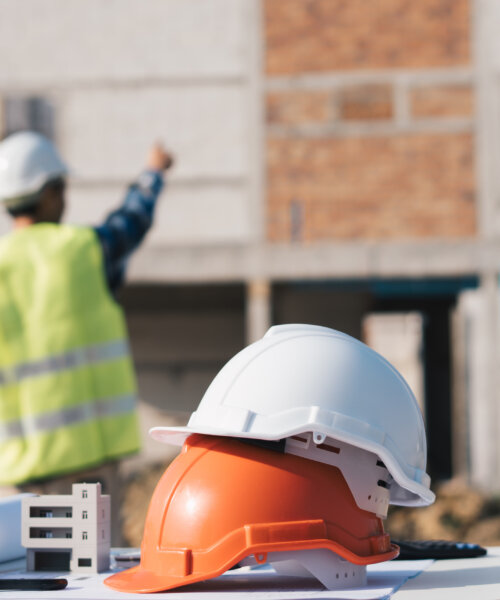
A Cook County construction litigation attorney handles legal disputes that grow out of building projects, from unpaid work and mechanic liens to defective construction and contract breaches. The work spans pre-suit strategy, negotiation, motion practice, and, when needed, trial.
Most construction disputes come down to money, time, and quality. Someone did not get paid, a project ran late, or the finished work did not match the contract. Our job is to turn those facts into a clear legal position and a plan to resolve it.
We represent every side of a project. That includes property owners and developers, general contractors, subcontractors at any tier, material suppliers, and design professionals. Each role carries different rights, deadlines, and leverage.
What that role looks like in practice depends on the goal. Sometimes the aim is a fast, clean recovery on an unpaid balance, and sometimes it is defending a project against a claim that could tie up funds for months. We shape the approach around the outcome you actually need, whether that is payment, a release, damages, or a workable settlement.
Construction Disputes We Handle in Cook County
Construction disputes in Cook County tend to fall into a handful of recurring categories, and each one carries its own rules and remedies under Illinois law. We handle the full range, whether you are chasing payment or defending against a claim.
Payment fights are the most common. Contractors and suppliers who go unpaid often turn to a mechanic lien under the Illinois Mechanics Lien Act, which attaches a claim directly to the improved property. Private projects are also governed by the Illinois Contractor Prompt Payment Act, which sets payment timelines and interest penalties for late payment.
- Mechanic lien claims, foreclosure, and lien defense
- Payment and retainage disputes on private and public projects
- Construction defect and workmanship claims
- Delay, disruption, and scheduling claims
- Breach of contract and change-order disputes
- Residential home repair and remodeling disputes
- Subcontractor, supplier, and payment bond claims
No two projects are identical, so we build each strategy around the contract, the record, and what the client actually needs.
Residential work adds another layer through the Illinois Home Repair and Remodeling Act, which sets contract and disclosure rules for work on a home. Knowing which statute controls and how the courts read it shapes the strategy from the first filing.
How Do Mechanic Liens Work on Cook County Projects?
A mechanic lien lets unpaid contractors and suppliers place a claim on the property they improved, and in Cook County that claim is recorded with the county and follows strict statutory steps. Getting the timing and paperwork right is what makes or breaks a lien.
For owners, an unexpected lien can freeze a sale or refinance until it is cleared. For contractors and suppliers, a lien is often the strongest leverage to get paid. Either way, the details matter, because notice content, service, and filing windows are all governed by statute.
In Cook County, a lien claim is recorded with the county, and the notice and filing steps leave little room for error. A small mistake can sink an otherwise valid claim. We handle both sides, from perfecting and foreclosing liens to challenging claims that are late, overstated, or improperly served.
Common Reasons Cook County Construction Projects End Up in Court

Cook County keeps a steady pace of commercial, residential, and public construction, and with that volume come disputes. Most construction lawsuits trace back to a few predictable pressure points. Spotting them early can help you protect a project before a disagreement hardens into litigation.
- Vague or incomplete contracts and missing change-order procedures
- Scope creep and disputed extras
- Payment delays that ripple down the subcontractor chain
- Defective or non-conforming work discovered late
- Schedule slippage and delay claims
- Thin documentation of site conditions and communications
The common thread is documentation, which is exactly where a construction dispute is usually won or lost.
Defect cases also carry their own clock. Under the Illinois construction statute of repose, claims tied to design, management, or construction generally must be brought within a set window after the work, with a shorter limitations period once a defect is discovered. Acting quickly keeps those options open.
Why Does Cook County Construction Litigation Require Local Court Knowledge?
Cook County runs one of the largest unified court systems in the country, and where a construction case lands can shape how it moves. Knowing the Circuit Court of Cook County and its divisions from day one is part of building a strong strategy.
Most sizable construction disputes are filed in the Law Division of the Circuit Court of Cook County, which hears civil claims above set dollar thresholds. Cases in Chicago run through the Richard J. Daley Center, while suburban matters are heard in the district courthouses, including Rolling Meadows, which serves the Schaumburg area.
Local procedure, standing orders, and judicial preferences vary from courtroom to courtroom. Our familiarity with Illinois courts and Cook County practice lets us move with discipline instead of guesswork. That head start often matters most in the early motions that set the tone of a case.
Filing details shape strategy too. Civil filings in Illinois are handled through mandatory e-filing, and some smaller claims route into court-annexed arbitration before they ever reach a trial calendar. Reading those signals early helps us position a construction dispute for the fastest sensible resolution.
A Construction Litigation Lawyer Who Has Lived the Build
Few litigators come to construction cases from inside the industry, but that is where our founding attorney started. Ahmed Motiwala practiced as a transactional real estate attorney and closed hundreds of deals a year, with more than a thousand across his career, to the point that Chicago Title staff knew him by name.
He also worked as a real estate investor who fixed and flipped properties, so he understands construction and the trades as an operator, not only as a lawyer. His path into litigation came from a hard lesson.
A contractor he had funded concealed that a supposed million-dollar flip had been condemned and gutted by the City of Chicago, and recovering that loss through a Chicago litigator changed the direction of his career.
He started out pushing wheelchairs at O’Hare as a kid, then spent his early legal years representing banks in post-2008 foreclosure work before deliberately switching sides to stand with individuals and small businesses. He has since beaten banks in litigation more than once. As he puts it, “Just because there’s nothing in writing doesn’t mean it didn’t happen. It obviously happened.”
That client-first instinct traces back to values his late father instilled and a commitment to the Schaumburg community. He frames advocacy as more than winning, describing the job as being the champion of a client’s cause. In his father’s words, “What makes you rich isn’t how much money you have in your bank account, it’s how much value you can add to others.”
How Do We Build and Prove a Construction Case?
We build construction cases on evidence that holds up in court, not on assumptions. That means qualified expert witnesses to establish damages, disciplined discovery, and a record assembled from contracts, invoices, texts, and emails. The stronger that record, the more leverage you carry into settlement talks or trial.
Contractor estimates alone often fail as proof because they can be treated as hearsay. We prove damages through qualified expert witnesses whose opinions stand up to challenge. Where the paper trail is thin, we use subpoena power to pull phone and email records and mine text messages for what actually happened.
Strong facts and weak facts both need a plan. Our founding attorney is known for taking cases other lawyers pass on, and he gets energized when, in his words, “someone brings me a viable case that I know other attorneys have turned down because they weren’t willing to roll up their sleeves.” The goal is a record clear enough to resolve a dispute on favorable terms, at the table or in the courtroom.
What Happens When You Bring Us a Construction Dispute?

When you bring us a construction dispute, we start by evaluating risk, leverage, and financial exposure, then build a strategy designed to protect your operations and long-term interests. You get clarity early, not months into the case.
Our first step is a candid case assessment. We review the contract, the payment history, the schedule, and the communications, then tell you where you stand and what the realistic paths look like. That honest read lets you make decisions with open eyes.
From there, we prepare every matter with courtroom discipline while staying focused on an efficient, business-aligned resolution. Some disputes settle after a well-placed demand or motion, while others need trial. Either way, you will know the plan and the next step at each stage.
Why Clients Choose M&A Law Firm, P.C. Trial Lawyers for Construction Disputes
Choosing a construction litigation attorney comes down to focus, judgment, and trust. Here is what sets our firm apart for construction disputes in Cook County.
- More than 25 years of litigation experience and over $665 million recovered for clients
- 559+ Google reviews at a 4.9-star average
- A boutique firm focused on civil, business, and commercial disputes, so your case gets senior attention
- Selective hiring, including paralegals who hold law degrees
- Ongoing training through regular lunch-and-learns, at times featuring sitting judges
- Billing transparency, including a refusal to bill clients for an underqualified associate’s inefficiency
- Scheduled client updates so you are never left wondering where your case stands
We also turn away work when it is not right for the client. If your current attorney is doing a good job, we will tell you, and if a case is not worth pursuing, we will say so. Call 847-786-8999 to talk through your matter with a litigation attorney who will be straight with you.
Past results do not predict or promise a similar outcome in any future case. Every matter is different and turns on its own facts.
Related Construction and Business Litigation Services
Construction disputes rarely stay in one lane, and our practice reflects that. Our construction litigation services often overlap with business, commercial, and real estate litigation, which lets us handle a dispute from every angle it touches.
A payment fight can involve a partnership disagreement. A defect claim can turn on a poorly drafted contract. Because we handle the surrounding business and commercial matters too, nothing falls through the cracks between practice areas.
When a project problem reaches into your wider business, one focused team can carry the whole matter forward. That continuity keeps strategy consistent and spares you the cost of bringing a second firm up to speed.
FAQs Answered by a Cook County Construction Litigation Attorney
Below are answers to questions we hear often from clients weighing a construction dispute in Cook County.
How much does a construction litigation attorney cost in Cook County?
Cost depends on the size and complexity of the dispute, the fee arrangement, and how far the matter goes. We are upfront about billing and will not charge you for an underqualified associate’s inefficiency. During a free consultation, we can walk through likely costs and the fee options that fit your situation.
How long do I have to file a construction claim in Illinois?
It depends on the type of claim. Breach of contract, defect, and mechanic lien claims each run on different clocks, and some are short. Mechanic liens in particular follow strict timelines, and the mechanic lien filing deadlines can be surprisingly short, so it is worth talking to an attorney early.
Can I sue a contractor for defective work?
In many cases, yes. Illinois law lets owners pursue contractors for work that does not meet the contract or accepted standards, subject to the applicable limitations and repose periods. The strength of a defect claim usually turns on documentation, timing, and testimony from qualified expert witnesses.
What is a mechanic lien?
A mechanic lien is a legal claim that attaches to real property when a contractor, subcontractor, or supplier is not paid for work or materials. It can cloud title and complicate a sale or refinance until it is resolved. Owners can also challenge liens they believe are invalid or overstated.
Do construction disputes always go to trial?
No. Many construction disputes resolve through negotiation, motion practice, or settlement well before a trial date. That said, we prepare every matter with trial-level discipline, because a credible willingness to try a case often improves the terms of a settlement.
Why hire a local Schaumburg construction litigation lawyer?
A local Schaumburg construction litigation lawyer brings familiarity with Cook County courts, local procedure, and the judges who hear these cases. That knowledge can save time and reduce missteps in the early stages of a dispute. It also means you can meet face to face with the attorney handling your matter.
Do you represent both sides of construction disputes?
Yes. We represent owners, developers, general contractors, subcontractors, and suppliers, whether you are pursuing a claim or defending against one. Having worked every side of these cases sharpens how we anticipate the other party’s next move.
Talk to a Cook County Construction Litigation Attorney Today

A stalled project or an unpaid invoice does not have to define your bottom line. Whether you are an owner, contractor, or supplier, a Cook County construction litigation attorney can help you weigh your options and act before deadlines pass.
Our team handles the common construction disputes in Cook County with the focus and courtroom discipline your matter deserves. Consultations are free and confidential, and you will speak directly with a litigation attorney about your position, your risks, and your next steps.
Call M&A Law Firm, P.C. Trial Lawyers at 847-786-8999 today to get started.